Contact

User identification

Forgot access data?

If you don´t have access data please send us the following request form duly filled in:

Request received correctly

Furniture for funeral homes, crematoriums, churches, and chapels

Furniture solutions for funerary architecture and contemplative spaces where comfort, durability, and architectural integration are all part of the same design criteria. 

DOWNLOAD INSTALLATIONS


When furniture complements the space without imposing itself 

Spaces intended for farewell, contemplation, or reflection require a particular sensitivity. In these environments, furniture does not merely fulfill a practical function: it also contributes to the atmosphere of the place. 

That is why furniture for funeral homes, crematoriums, churches, and chapels must address several needs simultaneously. It must provide comfort during extended waiting periods, perform reliably under intensive public use, and maintain a discreet presence capable of integrating into the architecture without competing with it. 

At Sellex, we design and manufacture benches for ceremony rooms, waiting areas, and reception spaces following this logic. These are durable, functional, and technically reliable solutions conceived for projects where every decision influences both the user experience and the perception of the space. 

We work with architectural firms, interior designers, construction companies, and funeral service providers seeking furniture capable of conveying serenity, stability, and permanence without sacrificing design.

Benches for funeral homes and wake rooms

Benches for funeral homes and wake rooms have specific requirements. Each area — ceremony rooms, waiting zones, receptions, or common areas — presents different needs, and the bench must respond to them without losing formal coherence. 

Furthermore, funeral homes and wake facilities have evolved to accommodate diverse ceremonies and very different forms of farewell. This reality requires benches neutral enough to adapt to different rituals, sensitivities, and spatial configurations. 

Designed for waiting with comfort and discretion 

The selection of benches for funeral homes and wake rooms is usually based on three main criteria.

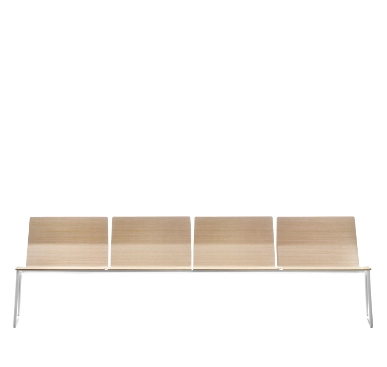
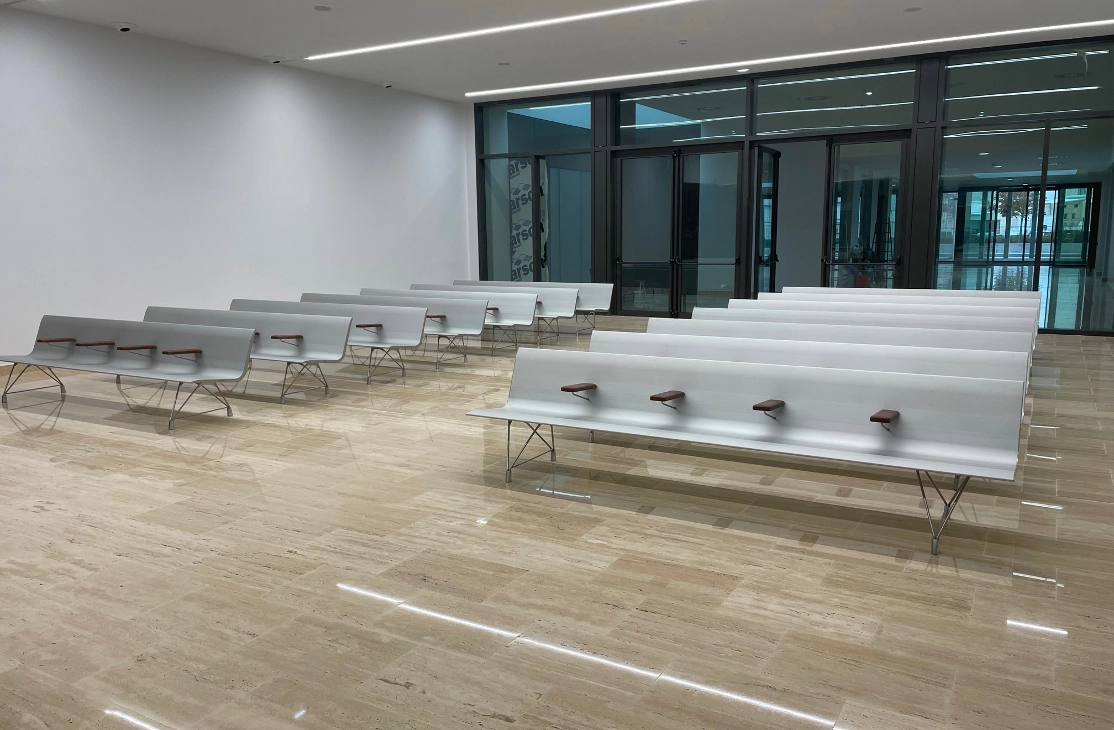
Comfort during extended waiting periods. When the goal is to provide a sense of calm and comfort during long stays — or, as Carlos Fernández, manager of Tanatorio Araso in Irún (Spain), described it, to convey “comfort in an uncomfortable situation” — upholstered solutions are particularly suitable. High-density foams, durable technical upholstery fabrics, and easy-maintenance finishes help respond to this type of use. AERO with Upholstered Pad, BILDU, or SLAM Soft are some of the options that can fit these contexts.

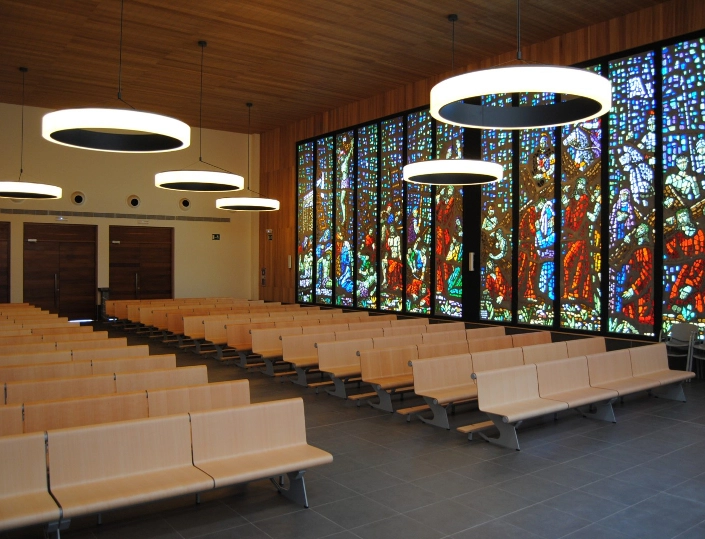
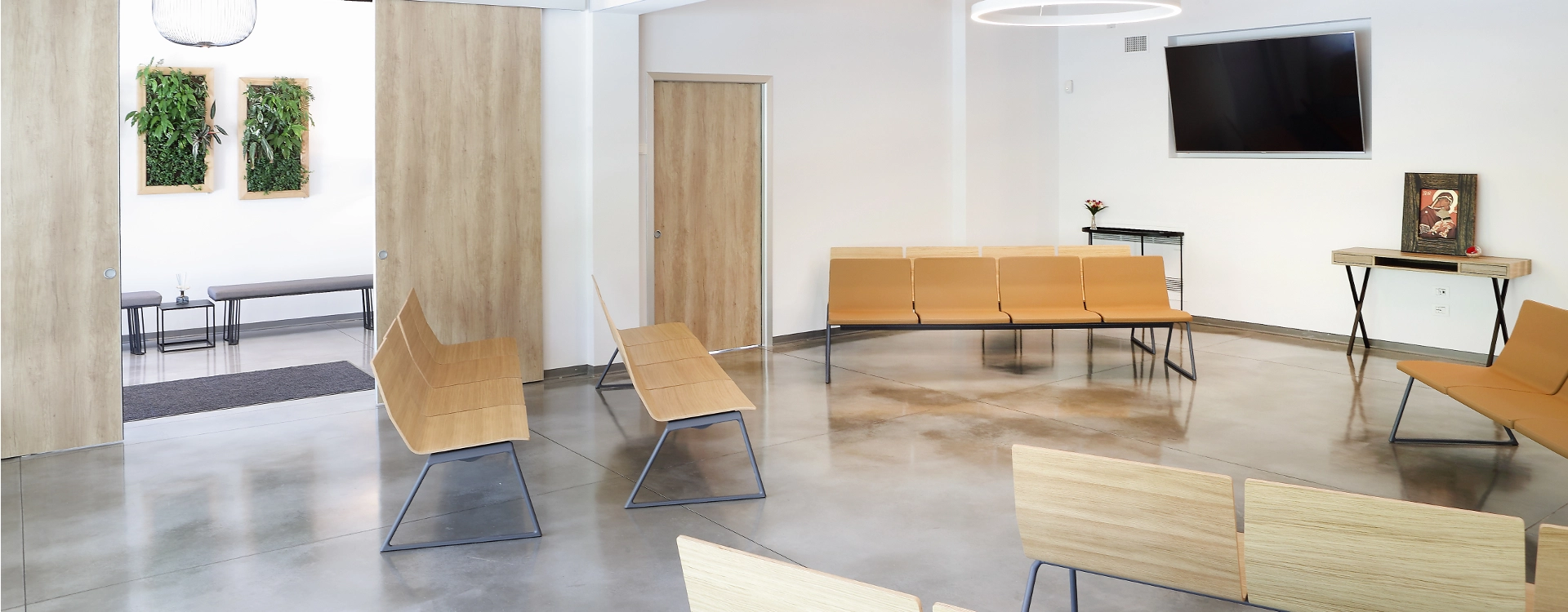
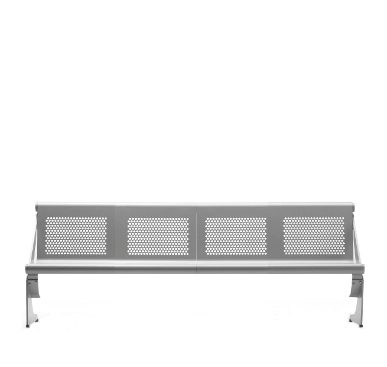
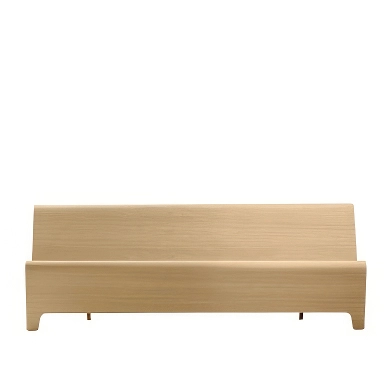
Aesthetic integration with architecture. When visual continuity within the project is the priority, benches capable of accompanying the space without imposing themselves are preferable. Solutions such as AERO, VACANTE, or BILDU allow for linear compositions, different upholstery options, and materials such as steel, aluminum, or wood, while maintaining a serene presence that does not overshadow the architecture.

Structural resistance for public use. In high-traffic facilities, durability, stability, and ease of cleaning are decisive. Sellex benches are conceived with materials and configurations designed to last, requiring minimal maintenance and offering warranties that can extend up to ten years.


Key considerations for specifying benches in funerary architecture

Beyond product performance, defining the right bench in this type of project depends on decisions that affect the overall functioning of the space.

In ceremony rooms with variable occupancy, modular or easily reconfigurable solutions can provide flexibility. In other contexts, linear benches reinforce continuity, visual order, and seating capacity.

Projects such as Servicio Funerario Sever in Zamora (Spain) demonstrate how flexibility can become a decisive criterion, allowing a room to adapt to ceremonial uses or changing needs. As Alfredo Estébanez García from AE Arquitectos (Servicio Funerario Sever) noted, the versatility to reorganize the space was decisive in the adopted solution.

In addition to comfort, upholstery can help shape the acoustic perception of the space by reducing reverberation and creating a more contained atmosphere. It can also be decisive when greater comfort is sought for long ceremonies.

The arrangement of benches affects more than just seating capacity. It conditions circulation paths, accessibility, relationships between rows, and the reading of the overall space. In certain projects, maintaining a clear rhythm between modules or seating rows can be as important as the bench itself.

These decisions form part of the architectural project. This is where furniture provides real value.

Benches for crematoriums

Benches for crematoriums share many requirements with funerary environments but add a strongly ceremonial dimension. 

In farewell rooms and ceremony spaces, the bench does not simply solve a functional need. It becomes part of the relationship between user, architecture, and ritual. That is why visual stability, ergonomic comfort, formal neutrality, and resistance for continued public use are especially important. 

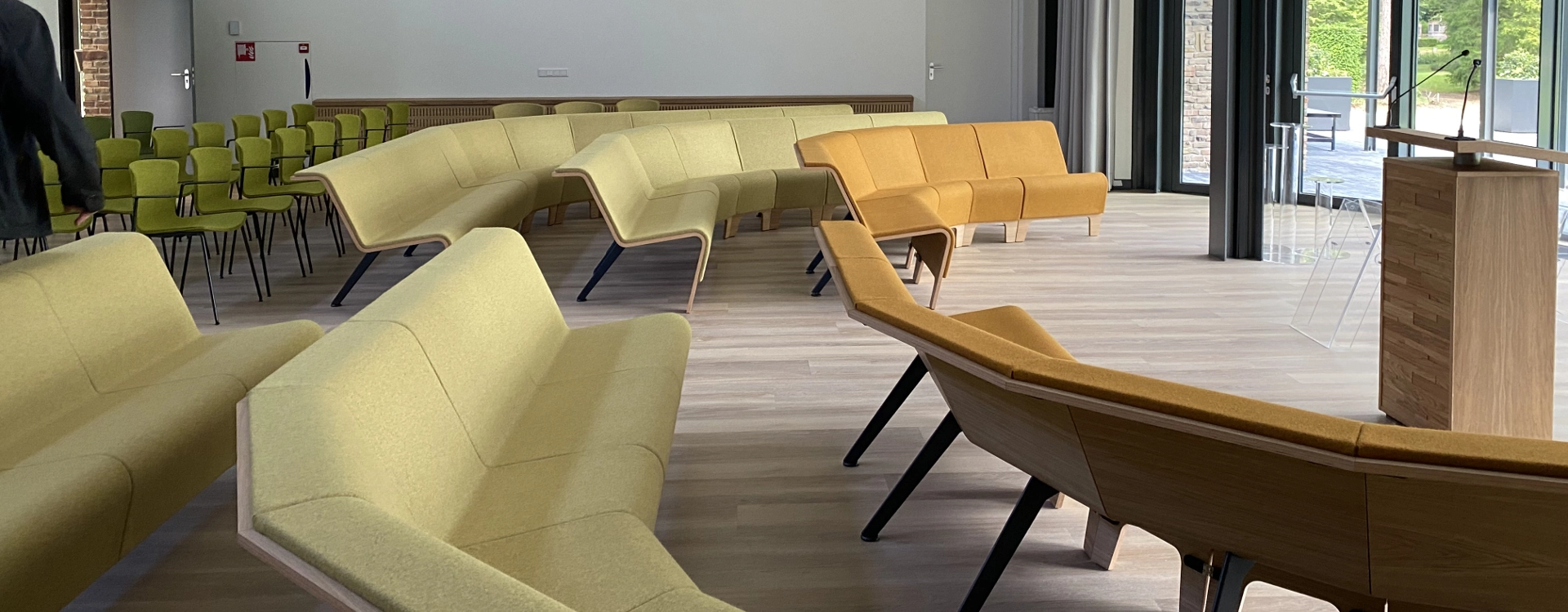
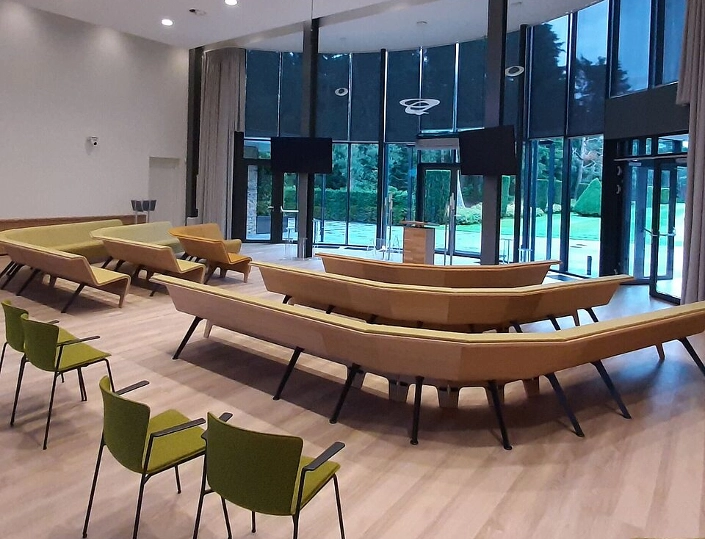
Projects such as the Zeist Funeral Home (Netherlands) demonstrate how furniture can contribute to creating more intimate and flexible spaces. In the words of Ineke Hulshof and Stephanie Gieles, who led the Zeist Funeral Home project, the system helped create an almost sacred interior — an idea that reveals the extent to which furniture can influence the experience of a cremation or farewell space.

Benches for churches and chapels

Benches for chapels, churches, and multifaith spaces require their own logic. 

Designing a church bench for a worship space is not the same as creating solutions for a chapel integrated into a hospital, airport, or funeral home. Each context demands a different relationship between liturgy, use, and architecture.


Contemporary reinterpretations of the church bench

In worship spaces or multifaith rooms, questions such as row orientation, the visual continuity of the ensemble, or the possibility of incorporating kneelers are part of design decisions that go beyond the bench as an object. 

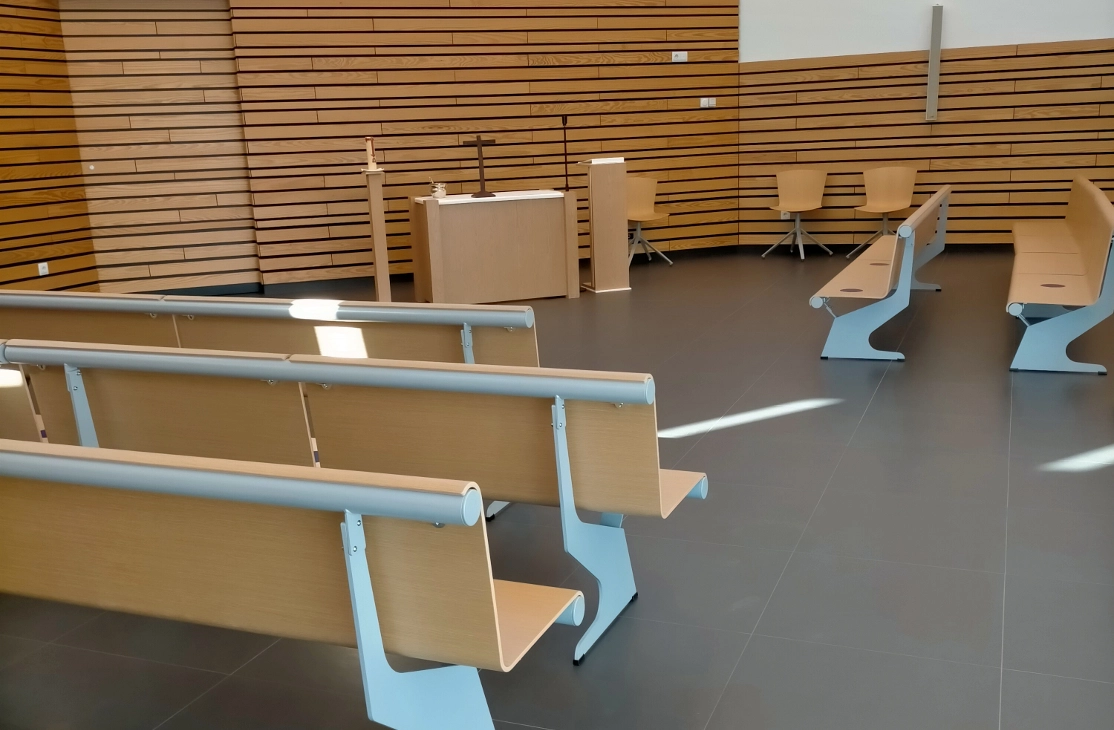
The evolution of the church bench has moved from purely functional solutions toward proposals capable of combining tradition, comfort, and spatial adaptability. Today, church benches can incorporate modular configurations, different finishes, upholstered options, and specific accessories depending on the needs of each project. 

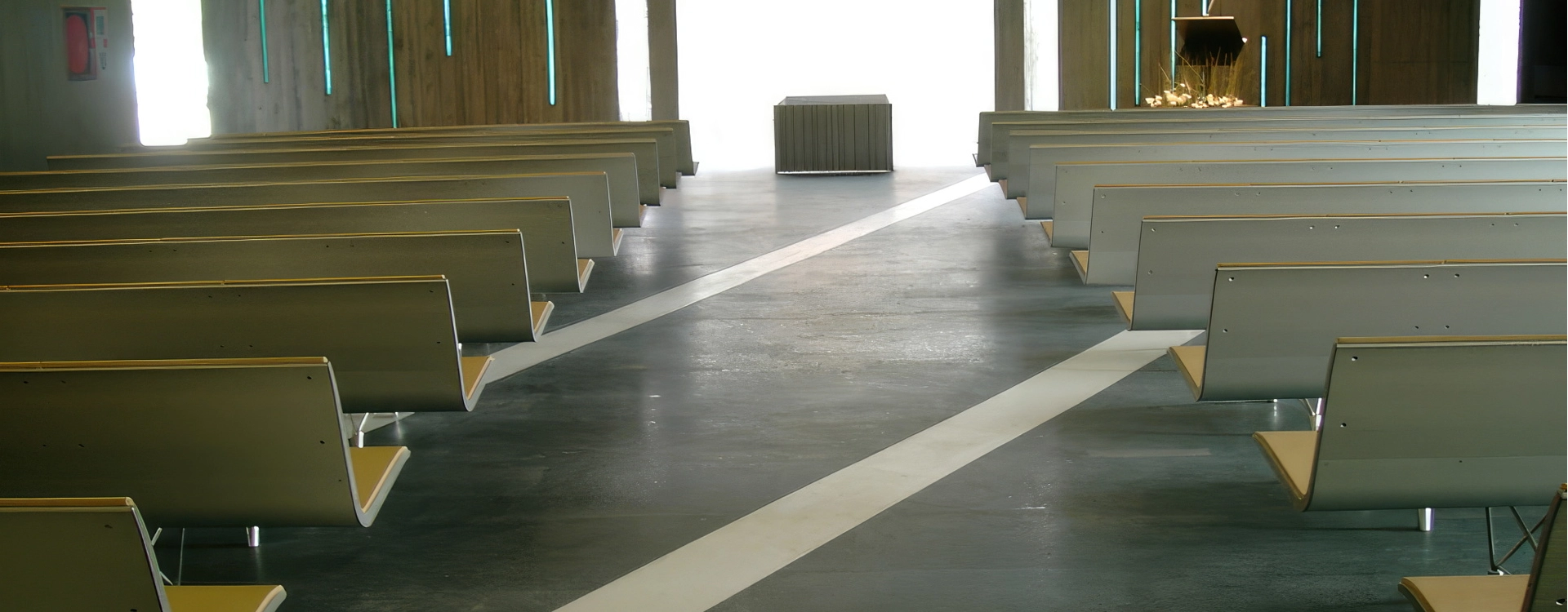
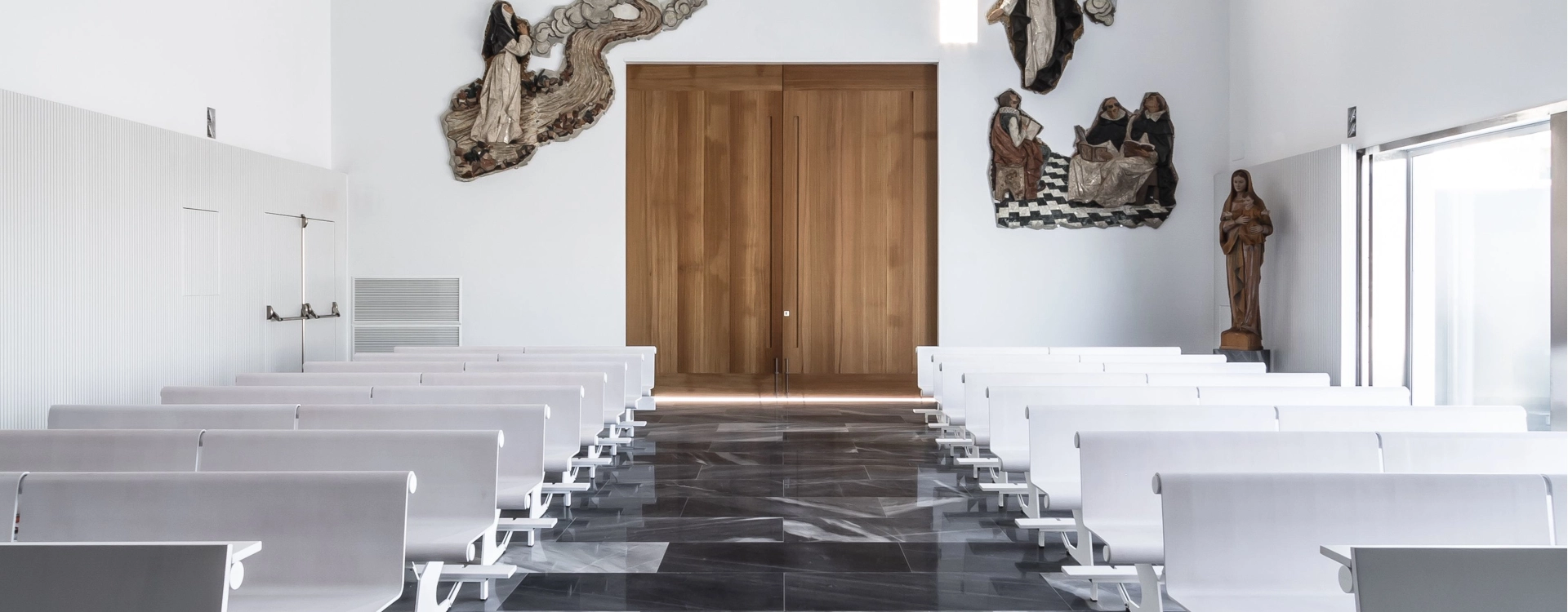
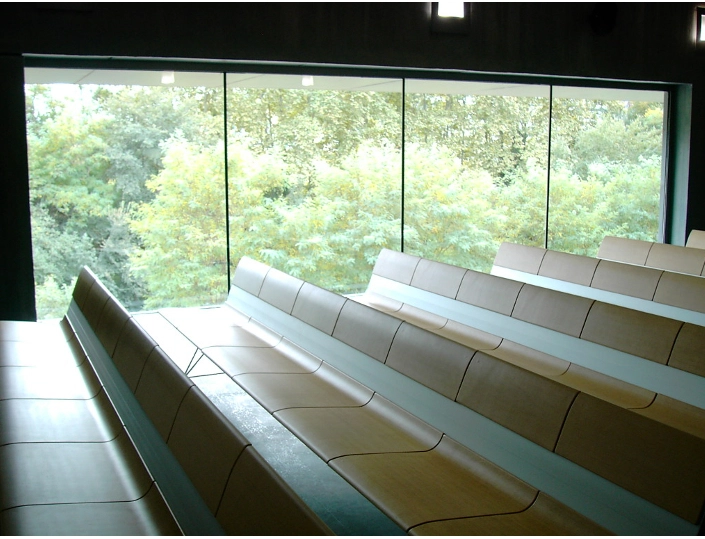
Within Sellex’s solutions, the VACANTE Bench particularly represents this reinterpretation of the traditional chapel bench. Its formal language, the possibility of incorporating a kneeler, its modularity, and the variety of shell options available make it especially suitable for chapel seating

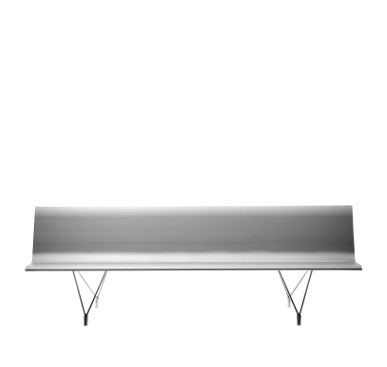
The AERO Bench offers an alternative with great capacity for integration into different contexts, while BACK Modular Seating reinterprets the traditional logic of church benches through a different sensibility. Alongside them, the BILDU Bench and the MASS Chair expand the possibilities for religious installations, multifaith chapels, or contemplative spaces.

Recommended products

Award-winning design, materiality, and durability for public use 

Several of our benches for funeral homes, chapels, and churches have been developed by renowned designers and authors such as Enric Miralles, Lievore Altherr Molina, and Burkhard Vogtherr. 

This cultural dimension of design is not an accessory attribute. It is part of how we understand the relationship between furniture, architecture, and public use. 

Technical quality begins with materials: aluminum and steel structures, wooden shells, high-resistance upholstery, and fire-retardant options when required by the project. All of this is combined with ergonomics designed to create a positive user experience during prolonged stays. 

Durability is also a form of sustainability. Sellex’s work incorporates eco-design criteria, conscious material selection, and processes aimed at extending product lifespan and reducing environmental impact. In public and institutional projects, permanence, maintenance, and environmental responsibility form part of the same decision.

What design contributes to a space of reflection

In these environments, design is not a decorative matter. 

It can influence the perception of calm, the dignity of the space, and the way a room accommodates waiting or accompanies a ceremony. Visual lightness, furniture scale, material honesty, or the continuity of a seating row can profoundly change how a place is experienced. 

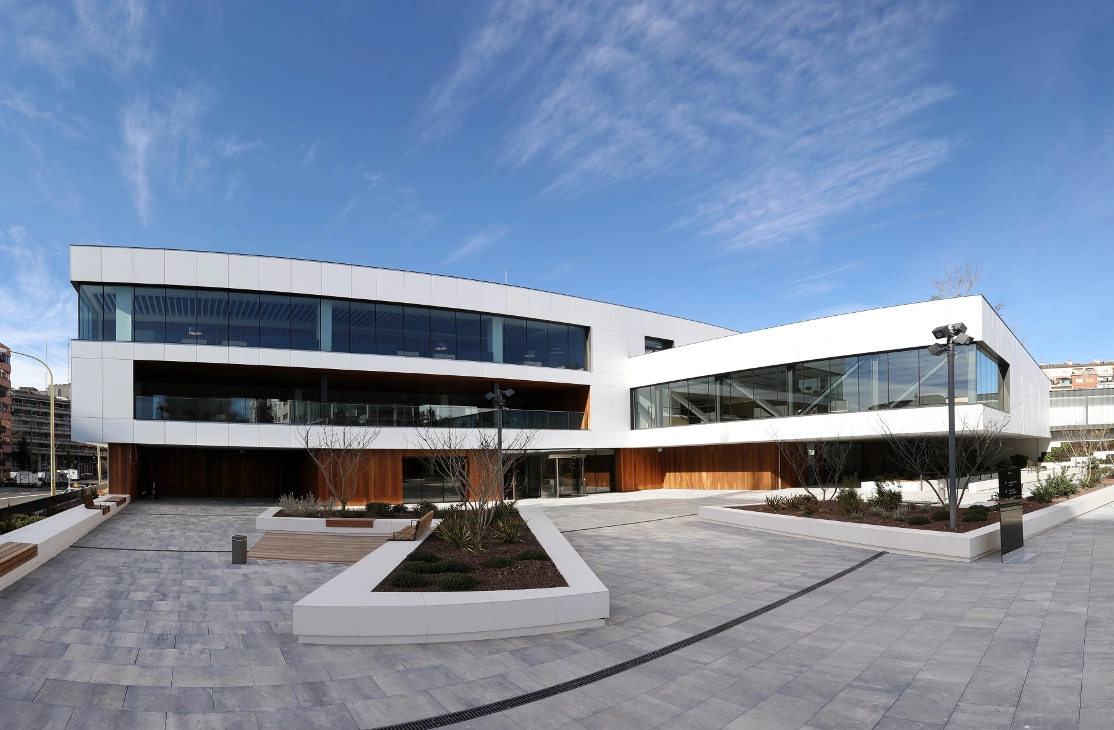
At the Sants Funeral Home in Barcelona (Spain), Xavier Ramoneda of Mirag Millet i Ramoneda Arquitectos described this quality as a visual clarity that does not compete with the space. It is a precise way of explaining the role furniture can play in funerary architecture: to be present without imposing itself.

Restrained design for contemporary funerary architecture 

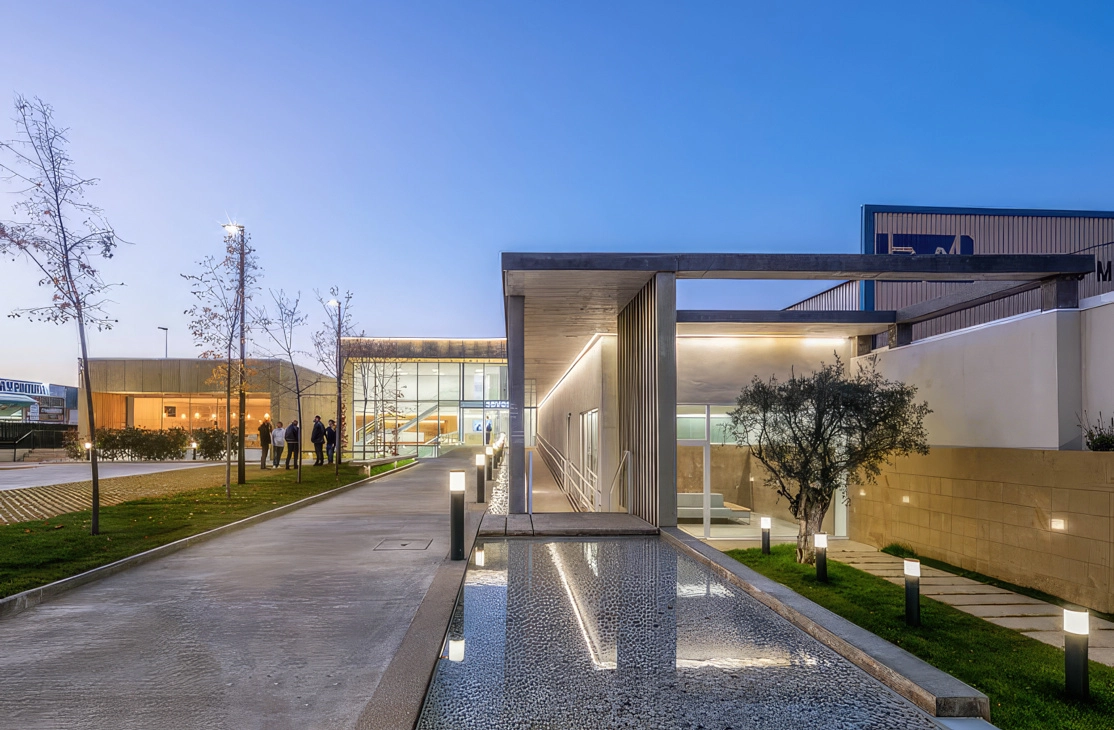
Contemporary funerary architecture has evolved toward more open, luminous, and serene spaces. Clean lines, honest materials, and atmospheres of reflection have gradually replaced more formal or solemn languages. 

In this type of project, furniture engages in dialogue with light, acoustics, spatial proportions, and the materiality of the whole. The atmosphere depends not only on the architecture; it is also shaped through seemingly discreet decisions such as the scale of a seating row, its visual lightness, or the continuity of its lines. 

We work with architecture, interior design, and specification professionals so that benches become part of the project from the earliest stages, contributing to a user experience and spatial logic that respond to the same criteria.


Spaces where our solutions are integrated 

The diversity of configurations, materials, and finishes allows our solutions to adapt to very different contexts: 

Both in new installations and complete renovation projects, benches can be configured to respond to the particularities of each space.


Three key criteria for choosing benches for funeral homes 

To facilitate solution evaluation, these are three basic criteria that usually influence specification:

  1. Long-term comfort
    If the space is designed for long waits or extended ceremonies, it is advisable to prioritize upholstered benches, carefully considered ergonomics, and materials that provide sustained comfort.
  1. Durability for public use
    In high-traffic facilities, structural resistance, easy maintenance, and long service life should be priorities.
  1. Architectural integration
    When the project requires formal neutrality and minimal visual interference, lightweight, modular solutions or those with strong material coherence with the space are recommended.

Projects where furniture forms part of the architecture 

We have experience in more than 150 installations in funerary and contemplative spaces. More than isolated references, we understand these projects as examples where furniture has contributed to solving specific architectural, functional, and experiential needs.

Zeist Funeral Home (Netherlands)

The project, developed by Ineke Hulshof and Stephanie Gieles, incorporated BACK Modular Seating and SLAM Chairs as part of a proposal aimed at generating intimacy, flexibility, and an almost sacred atmosphere. The possibility of adapting the seating rows to the available space and the ergonomics for different users were decisive criteria.

Araso Funeral Home, Irún (Spain)

The AERO Bench was selected, in the words of Carlos Fernández of Funeraria Irún, to convey comfort in an uncomfortable situation and for its modern aesthetic capable of integrating naturally into the facility.

Servicio Funerario Sever, Zamora (Spain)

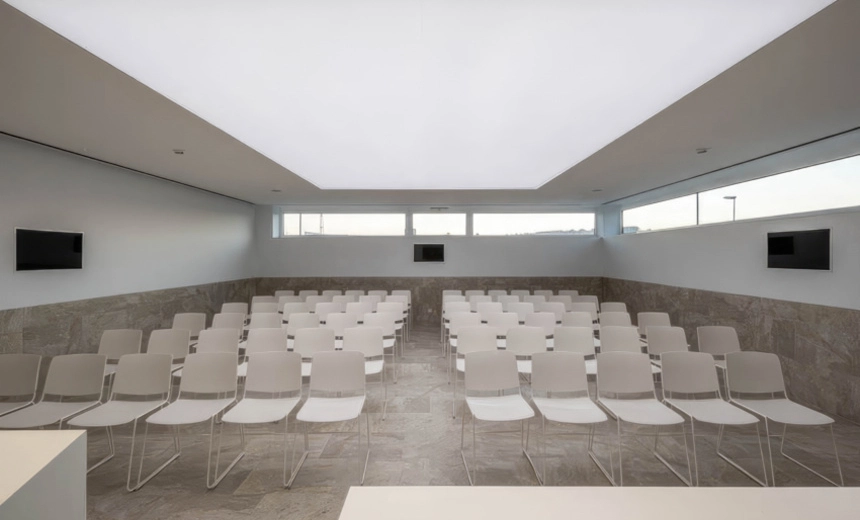
The MASS Chair was chosen, as Alfredo Estébanez García from AE Arquitectos explained, for its lightness, simplicity, and capacity to reorganize the space according to changing needs. Its stackability made it possible to respond to rooms that could function either openly or with different occupancy levels.

Sants Funeral Home, Barcelona (Spain)

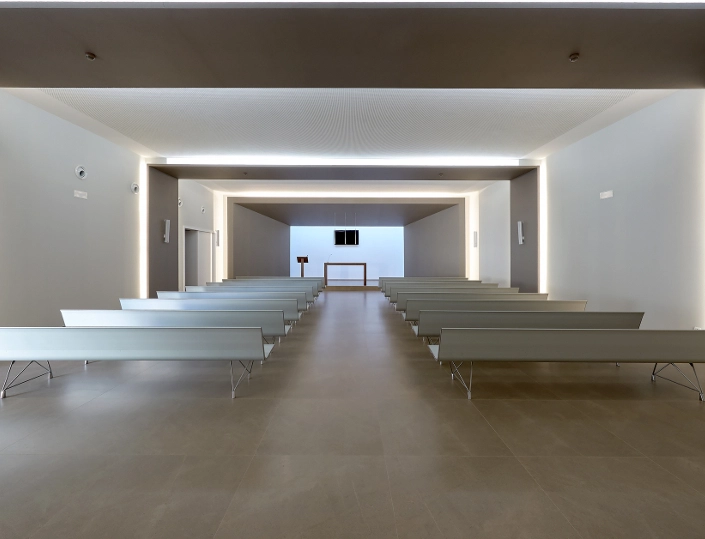
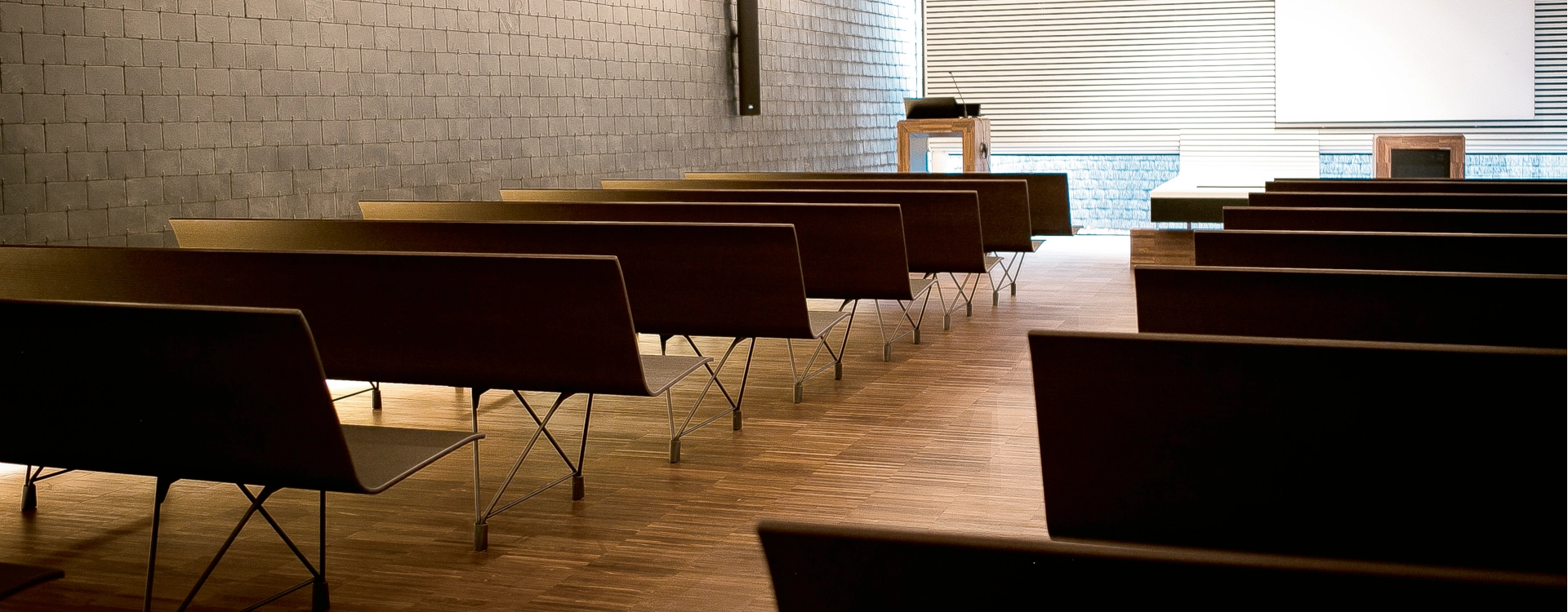
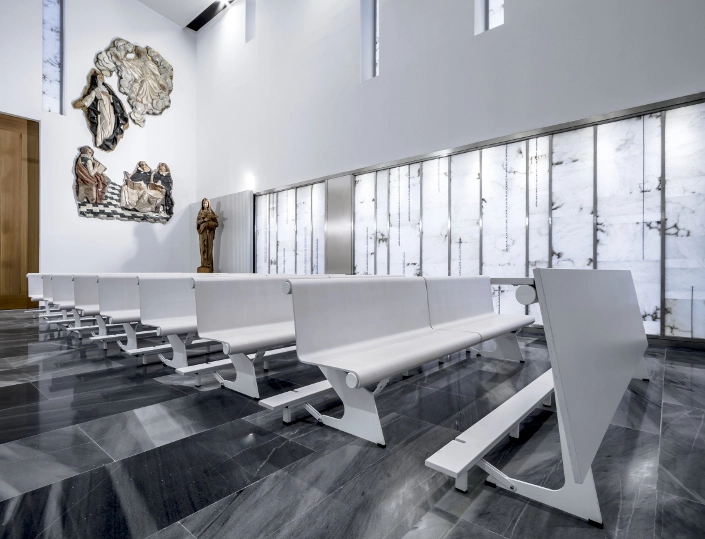
The AERO Bench was selected for a quality that Xavier Ramoneda of Mirag Millet i Ramoneda Arquitectos described as a visual clarity that does not compete with the space. 

Its structural lightness, the minimal section of the seat, and the resolution using only two supports allowed it to integrate into the ceremony room with a serene and timeless presence fully consistent with the project architecture.

Benicarló Funeral Home (Spain)

The AERO Bench responded, as Manel Conesa of Remsa pointed out, to a premise based on functionality, comfort, and innovation, with an aesthetic close to minimalist elegance.

A wake room bench should combine three main conditions: comfort for long stays, resistance for intensive public use, and architectural integration with the space.

In projects where the waiting experience and the serenity of the environment are important, these three variables are usually evaluated together.

Aluminum or steel structures, together with wood and high-resistance technical upholstery fabrics, generally offer excellent performance in funeral home furniture.

They are especially valued for their durability, ease of maintenance, and capacity to withstand demanding use conditions.

Yes, especially when prolonged comfort or a more acoustically contained atmosphere is desired.

In certain rooms, upholstery can provide not only comfort but also additional spatial qualities.

For chapel benches, modularity, the possibility of incorporating kneelers, architectural integration, and comfort during prolonged use are especially valued.

In some projects, the ability of the bench to adapt to different ceremonial configurations or specific usage needs is also important.

In spaces intended for reflection, farewell, or contemplation, furniture should support the project atmosphere without visually imposing itself.

Aspects such as long-term comfort, formal serenity, architectural integration, and durability for public use are usually decisive in this type of space.

It will depend on the regulations and technical requirements of the project.

In many cases, materials or upholstery capable of meeting these specific requirements can be incorporated.

Yes. We can collaborate with architecture firms, interior designers, and technical teams from the earliest stages to help define the most appropriate solution.


Designing to accompany without invading 

That is perhaps the principle that best summarizes our approach to these projects. 

In spaces where architecture must welcome without imposing itself, we believe furniture should act in the same way: supporting the experience discreetly, providing comfort without becoming visually dominant, and contributing to the dignity of the place through restraint. 

Our work is not limited to supplying products. We can support projects from their earliest stages to help define the most appropriate solution according to the technical, spatial, and functional requirements of each installation. 

If you are developing a project for a funeral home, crematorium, church, or chapel, we can help you study configurations, materials, and solutions adapted to its needs. 

Related news

Farewell finds a new language at Rekalde Berri

Sants Funeral Home, the construction of a building within another

A Funeral Home on the slopes of Montserrat

Benches
Chairs
Stools
Low Seatings
Tables
Shelving-Units
Bunk Beds
Partition Walls

Location and language

We have detected that you are in this country and using this language.If not, you can choose the country and language you prefer to browse comfortably.

Location and language

The Sellex online store is not available in your region.If you are interested in our honest design furniture, please contact us.

CONTACT