
User identification
Request received correctly
Benches, armchairs and chairs for waiting rooms
The right choice of waiting room seating is crucial, as this area plays a key role in the perception and experience of those who use it.
Needs vary significantly depending on the type of installation, and it is essential to consider these factors to provide comfort and functionality.

In this way, a chair for the waiting room of a doctor's office will never be the same as the waiting chair in an office, nor will it have anything to do with the waiting room benches that equip passenger terminals.
Along the following lines we will explore seating options for different types of waiting rooms.
How to choose chairs, low seating or benches for waiting rooms?
Regardless of the type of waiting room, there are several common factors that should be taken into account when choosing the benches and waiting chairs that will equip the facility.
- Comfort and ergonomics
Without a doubt, the first characteristic that any seat must meet is comfort and even more so if it is a waiting room chair, in which users must remain for a long time waiting to be served or received. Waiting seating must make the stay as pleasant as possible and, to do so, ergonomics must be prioritized. Only in this way can the well-being of users be guaranteed.
In this sense, it will also be necessary to consider issues such as the depth and width of the reception chair, so that it is wide enough and capable of accommodating any person, or the inclination of the backrest, so that the seat provides good lumbar support.

- Design and style
Comfort and ergonomics should never be at odds with aesthetics. Furniture in general, and waiting chairs in particular, have a direct impact on the perception of space. Therefore, you must always consider the design of the waiting seating because its style will determine the cohesion with the rest of the environment. For example, a modern, minimalist design may be more appropriate for an office waiting chair, while a more relaxed and welcoming design may be ideal for a doctor's office
- Durability
This type of seat is generally used by many people on a daily basis, so it is essential that the materials are resistant to withstand frequent use and, at the same time, guarantee easy maintenance. At Sellex it is something that we are very aware of and, for this reason, we only work with quality materials such as wood, stainless steel, polypropylene, etc.
- Hygiene
The choice of materials is also directly linked to hygiene. It is recommended to opt for materials that offer greater ease in cleaning and maintenance. This will create more hygienic environments, something very necessary in spaces for public use, especially in hospitals, doctors' offices and clinics.
- Accessibility
Another aspect to take into account is accessibility. We must ensure that waiting room seating can be used by people with reduced mobility. This can be achieved, for example, by providing an appropriate height that allows them to sit and stand up effortlessly and by providing armrests to provide additional support.
In conclusion, by considering all these factors (durability, comfort, accessibility, aesthetics and hygiene) the user experience can be significantly improved, giving rise to spaces that are not only functional, but also welcoming and efficient.

Types of seating for waiting rooms
- Waiting room chairs
The chairs are a versatile option for any waiting room. Their design can vary widely, from wooden or polypropylene chairs with a metal frame to models with upholstery and armrests.
Individual waiting room chairs allow for flexible arrangement in available space, and are ideal for small to medium-sized waiting areas where modularity and re-configurability are important.
In addition, some chairs, such as the MASS Chair by Sellex, are stackable, which makes them easy to store and allows adjusting the number of seats according to needs.
Another design by Sellex that also fits perfectly as a waiting chair is the SLAM Chair, which offers different versions of the same reception chair (sled, pyramidal, with wooden legs, with metal armrests...). The same happens with the NEST Chair, a model that, in addition to offering ergonomics, presents different models, all of them suitable for small waiting rooms.

- Lounge chairs or armchairs for the waiting room
Waiting room seating or individual waiting room armchairs offer a higher level of comfort. This is because the backrest inclination of these low seating is slightly higher than that of a chair. They are also usually wider and more robust, with more generous padding and a high backrest. This is the case of the SLAM Lounge, BACK Lounge and HAMMOK Low Seating, 3 designs of waiting room armchairs that in all their versions create a feeling of comfort that can significantly improve the user experience. Therefore, its use is recommended for facilities where waiting times are expected to be long, such as specialized clinics, doctors' offices and beauty salons. Its use is also frequent in educational facilities, such as libraries where we find waiting areas dedicated to reading. In short, a place of rest where comfort is essential.
- Benches and seating beams for waiting room
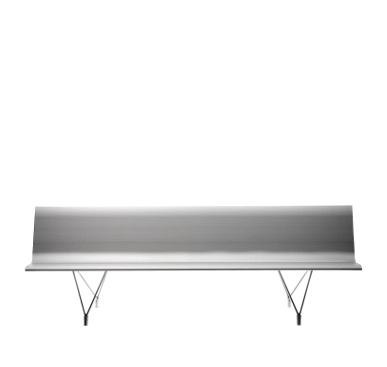
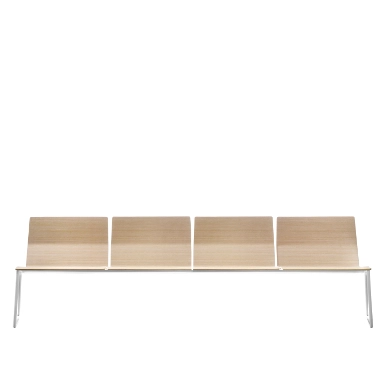
Benches and seating beams are another effective option for equipping waiting rooms, especially in areas with a high flow of people, such as passenger terminals (airports, bus or train stations or maritime terminals) or large medical centres such as hospitals or outpatients. Benches are recommended for large and busy waiting rooms, where efficiency and capacity are essential, but without neglecting comfort. We are facing seats in which users are going to wait for a long time and comfort is essential. For this type of installations at Sellex we have a wide catalogue of benches and seating beams such as AERO, BILDU, SLAM Soft, NEST Beam and SLAM Beam.


Types of waiting room
There are numerous types of companies and businesses that require a waiting room, understanding this as a reception and customer service area. These areas are fundamental to the operation of many businesses, improving service efficiency and the overall customer experience. Beauty centres, hairdressers, banks and financial institutions, notaries, consultancies... these are some examples of sectors where waiting rooms are essential, to manage appointments and to manage the flow of clients or patients.
Although there are many businesses that require a reception area, these are the facilities that most frequently require the services of Sellex when it comes to equipping their waiting rooms with modern reception benches and chairs.

- Waiting rooms in offices
In office receptions, the corporate image and the comfort of visitors are essential. Office reception chairs or armchairs should reflect the company's identity, opting for elegant and contemporary designs that project professionalism. Additionally, although the wait in these environments is generally short, it is important to also consider ergonomics to ensure that visitors can wait comfortably.
- Waiting rooms in passenger terminals
Passenger terminals, such as airports and bus stations, have unique requirements due to the volume and diversity of people who use them. The seating must be robust, durable and easy to maintain as they will be subject to intensive use. Metal waiting room benches are ideal in these facilities. It is also essential to consider incorporating power outlets and USB ports to meet the technological needs of travellers, something we offer at Sellex.
- Waiting rooms in hospitals and clinics
Waiting rooms in hospitals and clinics present a delicate environment where it is essential to comply with two points: comfort and hygiene. Hospital waiting chairs must offer comfort, but they also need to be easily cleaned to maintain high sanitation standards. Seating with antimicrobial upholstery and structures that facilitate daily cleaning are recommended. Furthermore, it is important that waiting areas are quiet environments that convey confidence, since normally the circumstances that lead us to a hospital are not entirely pleasant. Opting for calming colours and tactile materials can help reduce patient anxiety. And let's not forget the necessary aspects to facilitate access for the elderly or people with reduced mobility.

Seating options depending on the number of seats
As we have already seen along these lines, waiting rooms can be equipped with individual seats (chairs and low seating) or multiple seats (benches and seating beams). Choosing one or the other will depend on many factors, mainly the type of installation and its size.

Individual waiting chairs offer users a defined personal space, ideal for maintaining individual privacy and comfort. This type of seating is perfect for equipping environments that require greater privacy such as legal offices, psychological clinics or medical offices. Spaces that are generally small, which is a double advantage because individual waiting room chairs allow for a more flexible and efficient arrangement.
In larger facilities you can opt for tandem chairs for the waiting room. This type of multi-seat seating, such as benches or connected chairs, allows more people to be accommodated in less space and provides a tidier, more uniform appearance to the waiting room.
It is very common to find benches or joined chairs for waiting rooms in airports, hospitals or large offices. Places where it is necessary to accommodate a large number of people and where turnover is high, since users do not wait for a long time.
All our benches and beams can accommodate from 2 to 6 seaters. In this way, we have everything from tandem chairs with two seats or triple chairs for waiting rooms, to tandem chairs with 4 seats or more. We also have modular seats such as BACK Modular Seating, the SLAM Soft Bench or the SQUARE Modular Seating system. These three designs adapt perfectly to the needs of each space since we can configure them as we wish, creating different compositions of waiting chairs from 2 to 6 seaters: linear, curved, zigzag-shaped, etc. Even some models like SQUARE can be combined with tables of various sizes.

Seating arrangement in waiting rooms
With so many options it can be difficult to decide. When choosing, the important thing is to take into account some basic criteria in the seating arrangement to optimize the space of the waiting room and improve the user experience.
It is essential to leave enough space between seats to allow free circulation and easy access, especially for people with disabilities.
On the other hand, in large waiting rooms, it is useful to create differentiated areas for groups, individuals and people with special needs.
And finally, the layout must allow a clear line of sight towards the reception or information points, facilitating communication and access to services.
If even so, following these tips, you are not sure which is the best option for your project, our team can advise you and resolve all your doubts. Because we know how important it is for you to find the most appropriate solution and, therefore, at Sellex we not only put at your disposal a wide catalogue of seating for waiting rooms, but we are here to help you and offer you the best personalized options for you.
Recommended products

SLAMChair

MASSChair

NESTChair
AEROBench
BILDUBench

SLAM SoftBench

NEST BeamBench

SLAM BeamBench
Related news

Design and well-being at IMED Levante Hospital in Benidorm
- 19.02.2026
- VIEW NEWS

Chromatic harmony in the Tooth Doc Dental Clinic
- 09.09.2024
- VIEW NEWS

Lighting as a key element of the Dr. J.WI. Clinic.
- 08.05.2024
- VIEW NEWS


